Home/ChatGPT vs Claude vs.../Perplexity AI vs ChatGPT

Perplexity AI vs ChatGPT: Research Accuracy, Pricing & Best Use Cases Compared
5 Creators5 Videos130 ClaimsPublished 2026-07-13
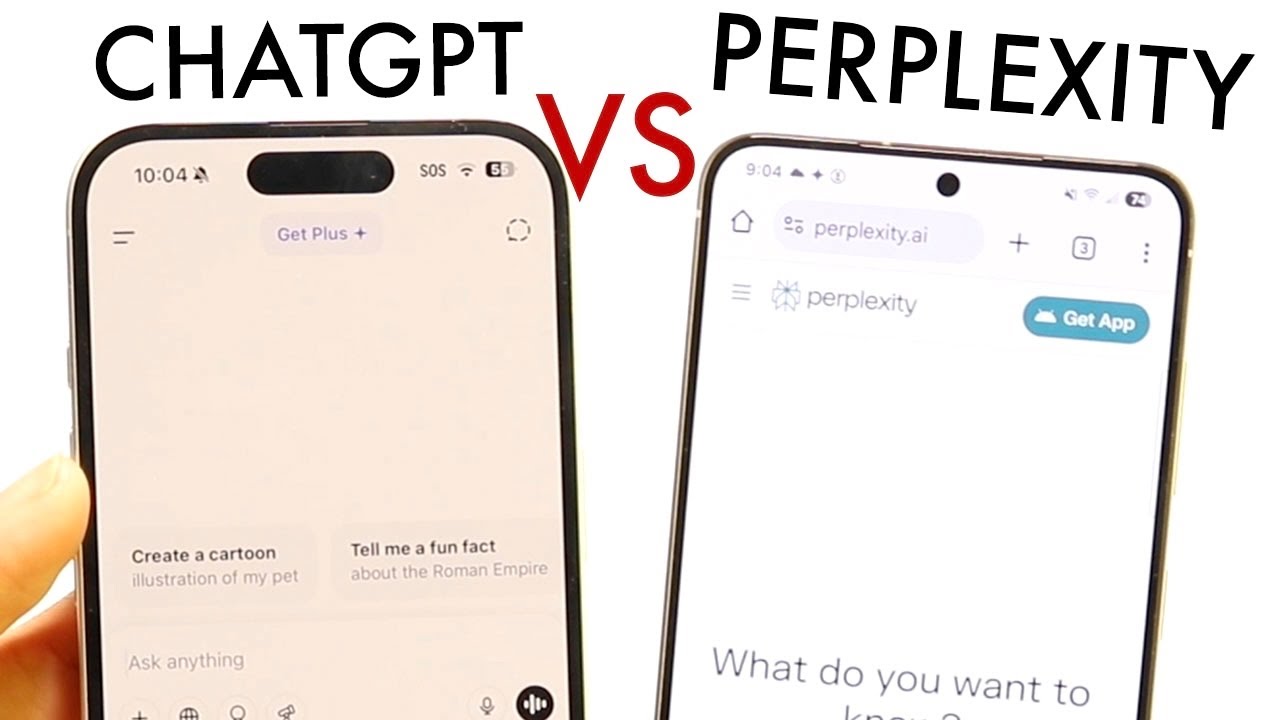
Perplexity AI vs ChatGPT video cover

Choosing between Perplexity AI and ChatGPT isn't about which is 'better'—it's about matching the right tool to the right task. After analyzing 130 claims from 5 in-depth video reviews, a clear picture emerges: Perplexity dominates research and fact-checking with inline citations and multi-model orchestration, while ChatGPT leads in creative writing, coding, and conversational depth. The real winner is a hybrid strategy: use Perplexity for verified data, then feed it into ChatGPT for synthesis and storytelling. This page breaks down pricing, accuracy, features, and the emerging controversy around Perplexity's autonomous 'Computer' that could reshape the AI landscape.

SUMMARY

For fact-checking and research, rely on Perplexity; for creative writing and coding, use ChatGPT; combining both strategically maximizes productivity.

01Pricing, Plans and Value

Consensus
Both ChatGPT Plus and Perplexity Pro cost $20 per month.
Evan Burger, Savage Reviews and 2 other creators agree.
Both tools offer free versions with usage limitations.
Simple Alpaca, Savage Reviews and 2 other creators agree.
Unique Insights
Perplexity Max costs $200/month, no free trial, and can replace separate ChatGPT, Claude, and Gemini subscriptions, offering better value for heavy users.
Introduces a higher-tier plan that could reshape cost comparisons for power users.
ChatGPT Plus throttles to 80 messages every 3 hours; Perplexity Pro provides over 300 research queries daily; free Perplexity caps at 5 searches per day.
Provides specific usage limits not covered by other reviewers, essential for choosing a daily driver.

02Research Accuracy and Citations

Consensus
Perplexity provides inline citations and direct links to sources, making it superior for fact-checking, academic work, and research requiring verification.
Evan Burger, Savage Reviews, Tofu Golem, Coursera, Simple Alpaca and 5 other creators agree.
ChatGPT's default responses lack source citations; web browsing mode is needed for sources and is less integrated.
Savage Reviews, Tofu Golem, Coursera and 3 other creators agree.
AI tools (specifically Perplexity) now significantly outperform traditional Google search for research, delivering cited answers without ads.
Evan Burger, Coursera and 2 other creators agree.
Unique Insights
Perplexity Computer can deliver finished reports with comprehensive sources and application advice, going beyond search to autonomous task completion.
Describes a future product direction that could redefine research workflows beyond current tools.
Perplexity provides 5 to 10 specific source links per query, which is invaluable for cross-referencing and academic rigor.
Quantifies the source granularity, helpful for users who need traceable evidence.

03Creative Writing, Coding, and Special Features

Consensus
ChatGPT is superior for creative writing, marketing copy, brainstorming, and idea generation.
Savage Reviews, Tofu Golem, Coursera and 3 other creators agree.
ChatGPT is better for coding, maintaining context and producing cleaner code.
Savage Reviews, Coursera and 2 other creators agree.
Perplexity's responses prioritize factual accuracy over creativity, often feeling dry or lifeless.
Savage Reviews, Tofu Golem, Coursera and 3 other creators agree.
Unique Insights
ChatGPT features an advanced voice mode for real-time conversations and translation, with no equivalent in Perplexity.
Highlights a key differentiator for hands-free, interactive use cases such as travel or accessibility.
ChatGPT includes DALL-E image generation natively; Perplexity's image generation feels tacked on.
Points to integrated creative media features that could influence content creators' tool choice.
ChatGPT allows building custom GPTs without coding, extending versatility and personalization.
Emphasizes a customization ecosystem absent in Perplexity, appealing to users who want tailored assistants.

04User Experience and Performance

Consensus
ChatGPT is built for conversational, back-and-forth interactions, while Perplexity is more of a search/answer engine.
Simple Alpaca, Coursera, Savage Reviews and 3 other creators agree.
Diverse Views
Which tool responds faster?
View A: Perplexity is generally faster
Observed speed advantage in typical queries, likely due to optimized retrieval.
View B: ChatGPT is faster for complex queries
Provides approximate response times of 2–3 seconds for ChatGPT vs 4–5 seconds for Perplexity, attributing the difference to real-time search overhead.
Editor's Note: Perceived speed may vary greatly depending on query complexity, server load, and whether real-time search is invoked. Both tools offer near-instant answers for most everyday tasks.
Unique Insights
ChatGPT supports file uploads in the free version, while Perplexity currently lacks file upload support.
Critical for users who need document analysis without upgrading or switching tools.
ChatGPT remembers previous conversations and personalizes responses; Perplexity lacks persistent memory.
Important for ongoing projects and users who prefer continuity across sessions.

05Business Model, Market Trends, and Industry Disruption

Consensus
ChatGPT has a massive user base (hundreds of millions of paying users or 800M weekly active), dwarfing Perplexity's rapidly growing but smaller user base.
Evan Burger, Coursera and 2 other creators agree.
Unique Insights
Perplexity functions as an orchestration layer that integrates over 20 models, automatically selecting the best one per task, while ChatGPT locks users into a single model.
Core architectural differentiator that positions Perplexity as a meta-tool and could reshape how users interact with AI.
By not building its own models, Perplexity can instantly incorporate new models, turning AI developers into competing service providers, whereas single-model tools like ChatGPT restrict optimization.
Strategic business advantage indicating potential for sustainable disruption in a fast-evolving AI landscape.
The new Perplexity Computer can run autonomously for hours or days, breaking complex goals into tasks and using multiple AIs, potentially redefining the category.
A concrete, next-gen AI workflow that neither ChatGPT nor Google Search can currently match, signaling a possible paradigm shift.
The single-model era of AI is dead; multi-model orchestration is the future.
A bold, forward-looking thesis not echoed by other reviewers who still see strong, standalone value in single-model tools.

06Use Cases and Hybrid Workflow

Consensus
The most effective productivity strategy is to use Perplexity for research and fact-gathering, then feed the verified data to ChatGPT for synthesis, creative development, and analysis.
Tofu Golem, Coursera, Savage Reviews and 3 other creators agree.

07Overall Preference and Verdict

Diverse Views
Should Perplexity be viewed as a replacement for ChatGPT, or do they remain complementary tools with distinct strengths?
View A: Perplexity's multi-model orchestration and upcoming Computer will dominate and make single-model ChatGPT obsolete for serious work.
Argues that single-model tools lock users into suboptimal outcomes, whereas Perplexity's orchestration system provides automatic model selection, better security, and autonomous task completion, rendering ChatGPT and Claude outdated.
View B: ChatGPT and Perplexity serve different core functions; ChatGPT remains superior for creativity and coding, and they are complementary tools best used together.
Each tool has clear strengths: research/data for Perplexity, creative/coding/conversation for ChatGPT. Using both strategically provides optimal outcomes, and ChatGPT's massive feature set and ecosystem keep it highly relevant.
Editor's Note: The differing opinions reflect evolving product landscapes; Perplexity's new orchestration features may tip the balance for research-heavy users, while creators and coders still favor ChatGPT's strengths. The complementary approach is currently the safest bet for most professionals.

08Security, Reliability, and Privacy

Unique Insights
Perplexity Computer runs in isolated cloud sandboxes with no overlapping risks, improving security over tools like OpenClaw that had data-theft incidents.
Addresses a critical trust issue for AI agents acting on users' behalf, especially when competitors have suffered security breaches.
Perplexity's personal computer version requires user approval for every action, provides a full audit trail, and includes an automatic kill switch, prioritizing safety.
Important for enterprise and privacy-conscious users, setting a standard for autonomous agents that other tools may need to match.
OpenClaw tends to break and demands user maintenance, whereas Perplexity's cloud solution is designed to 'just work,' offering higher reliability.
Reliability comparison against a known autonomous AI tool adds context for power users evaluating long-term dependability.

Frequently Asked Questions

What is perplexity ai vs chatgpt?

The perplexity ai vs chatgpt comparison shows that Perplexity AI excels in research with direct citations, while ChatGPT leads in creative writing and coding. Understanding chatgpt vs perplexity ai helps you choose the right tool for your specific task.

How does the perplexity ai vs chatgpt cost compare?

Both have $20/month plans: ChatGPT Plus and Perplexity Pro. For the perplexity ai vs chatgpt cost, Perplexity Max ($200/month) can replace multiple subscriptions. The perplexity ai pro vs chatgpt plus comparison shows Perplexity Pro offers over 300 daily queries, while ChatGPT Plus throttles to 80 messages every 3 hours.

Which is better, perplexity ai vs chatgpt for research?

For research, perplexity ai vs chatgpt for research clearly favors Perplexity due to inline citations and direct links. Perplexity ai vs chatgpt accuracy is higher with verified sources, as noted in many perplexity.ai reviews. ChatGPT lacks native citations and requires web browsing mode for sources.

How does perplexity ai vs chatgpt for coding compare?

When evaluating perplexity ai vs chatgpt for coding, ChatGPT is superior because it maintains context and produces cleaner code. Perplexity's factual focus often yields dry, less creative code snippets, making ChatGPT the better choice for programming tasks.

Which is best, perplexity ai vs chatgpt which is best? And is perplexity better than chatgpt?

The perplexity ai vs chatgpt which is best depends on the task: Perplexity for research, ChatGPT for writing. Is perplexity better than chatgpt? For research accuracy, yes; for creative work, no. They are complementary tools, not direct replacements.

Can you compare perplexity ai vs chatgpt image generation?

In perplexity ai vs chatgpt image generation, ChatGPT clearly wins thanks to native DALL-E integration. Perplexity's image generation feels tacked on and less capable, so for generating visuals, ChatGPT is the preferred tool.

What is the perplexity vs claude vs chatgpt comparison? When to use each?

The perplexity vs claude vs chatgpt landscape shows each excels in different areas. For when to use perplexity ai vs chatgpt, rely on Perplexity for fact-checking and research, and ChatGPT for creative synthesis. This is a key insight from the perplexity ai vs chatgpt comparison: using them together maximizes productivity.

What is the best strategy for using Perplexity AI and ChatGPT together?

The optimal hybrid workflow uses Perplexity for fact-gathering and ChatGPT for creative development. By combining both, you leverage their distinct strengths—as confirmed in the overall perplexity vs chatgpt verdict—to achieve higher efficiency in research and content creation.